Loading...
Oil & Gas / Fuel Storage
80GHz Radar Level Sensor for Oil Storage Tanks
A buyer guide for evaluating non-contact 80GHz radar on oil, fuel, and chemical storage tanks, including installation and documentation checks.
The Buyer Problem
Oil and fuel tanks often have vapor, temperature swing, and hazardous-area requirements. Contact probes foul; ultrasonic sensors struggle with vapor and foam.
Recommended Approach
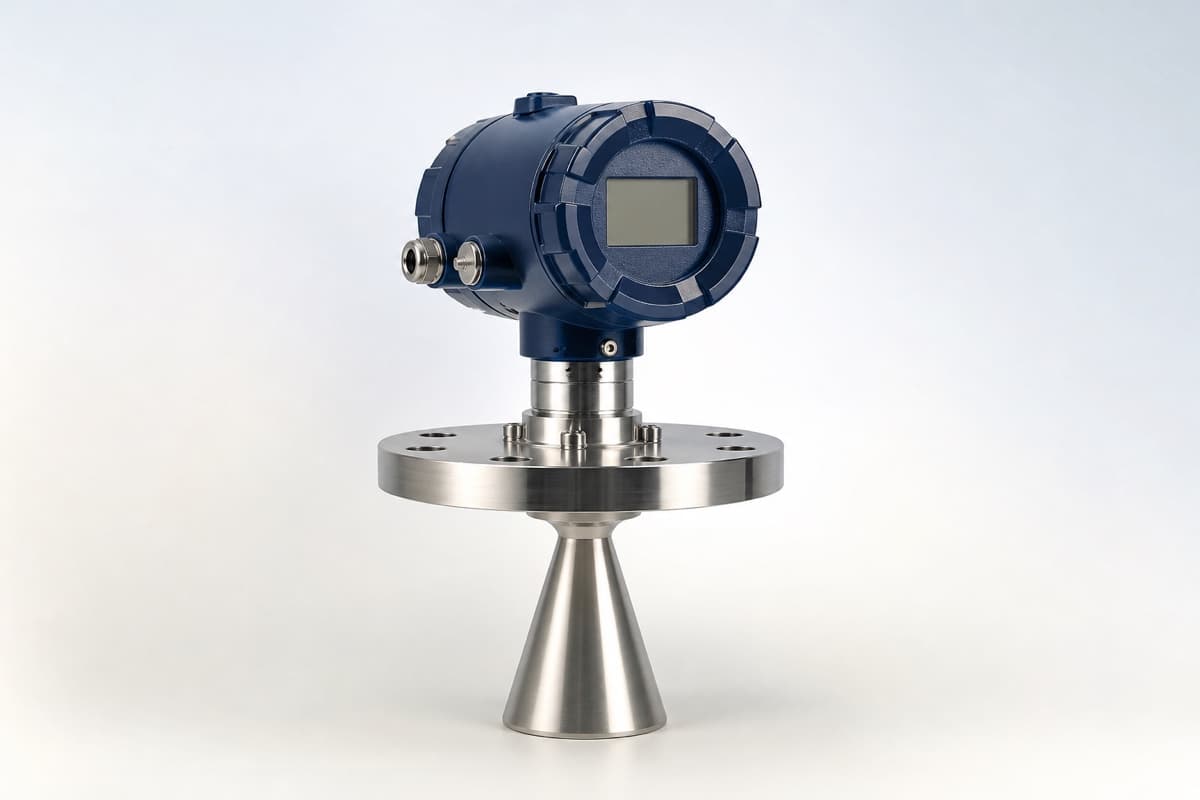
Evaluate the AM-RL80 against the tank drawing, process conditions, mounting geometry, required signal, and site classification. Confirm the exact model configuration and current documentation before ordering.
What to verify before selection
Published summaries do not replace the current datasheet, quotation, or model-specific compliance documents.
- Confirm measuring range, blind zone, accuracy, and antenna choice in the current model datasheet
- Match hazardous-area marking and certificate scope to the exact quoted model and installation zone
- Review nozzle size, tank internals, foam, vapor, temperature, and pressure with engineering
- Confirm power supply and output requirements for the control or tank-gauging system
- Request the current calibration, inspection, and compliance documents required for the project
RFQ Checklist
Send these details to request a project review, current model documentation, and quotation.
Tank height and nozzle size
Medium (crude, diesel, gasoline, chemicals)
Hazardous area classification (Zone 0/1/2)
Output signal (4-20mA, HART, Modbus)
Process temperature and pressure
Recommended Products
FAQ
It can be evaluated for non-contact measurement on these tanks, but final selection depends on tank geometry, vapor, process conditions, mounting, and site classification. Share those inputs for an engineering check.